Across tropical island economies, single-use plastic waste represents one of the most stubborn environmental and municipal challenges. With luxury hospitality, dining, and cruise tourism driving high daily consumption of disposable food containers and cutlery, islands import millions of single-use petroleum-based plastic items every year—only to burn or bury them in landfills shortly thereafter.
While many jurisdictions have enacted bans on single-use plastics, finding viable, premium alternatives that withstand moisture, heat, and commercial dining demands has proven difficult. Traditional paper products often sag, while commercial bioplastics like PLA require industrial composting temperatures exceeding 60°C that are rarely present in island municipal systems.
The Agricultural Solution: Naturally Fallen Palm Sheaths
An elegant, proven circular alternative is already abundant across tropical regions: the naturally shedding leaf sheath of the Areca and native palm varieties. In their natural growth cycle, palm trees continuously shed protective fibrous sheaths that fall to the ground as organic agricultural waste.
Rather than burning or clearing these fronds as yard debris, the material can be gathered, washed in freshwater, and heat-pressed into rigid, elegant tableware. The manufacturing process uses zero binders, chemicals, or synthetic polymers—the natural lignin and cellulose in the fibers bind together under heat and hydraulic pressure.
“True circularity begins by examining what an ecosystem discards naturally. In the Caribbean, agricultural biomass can become the foundation for high-value domestic packaging that keeps tourism dollars circulating within our own borders.”
Performance, Aesthetics, and Composting Realities
Palm-derived tableware provides notable physical advantages over paper, bagasse, and petroleum plastics:
- Thermal Resilience: Retains structural rigidity in temperatures ranging from -20°C in freezers to over 100°C for hot liquids and oven baking.
- Natural Water & Oil Resistance: The dense epidermal wax layer of the palm leaf provides a natural hydrophobic barrier without PFAS chemical coatings.
- Home Compostable: Decomposes completely in standard backyard compost or garden soil within 60 to 90 days, returning nutrients to local soil without leaving microplastics or synthetic residues.
The Island Opportunity: Decentralized Bio-Manufacturing
For island destinations like Turks & Caicos, establishing regional palm-leaf processing or partnering with Caribbean agricultural producers transforms hospitality procurement:
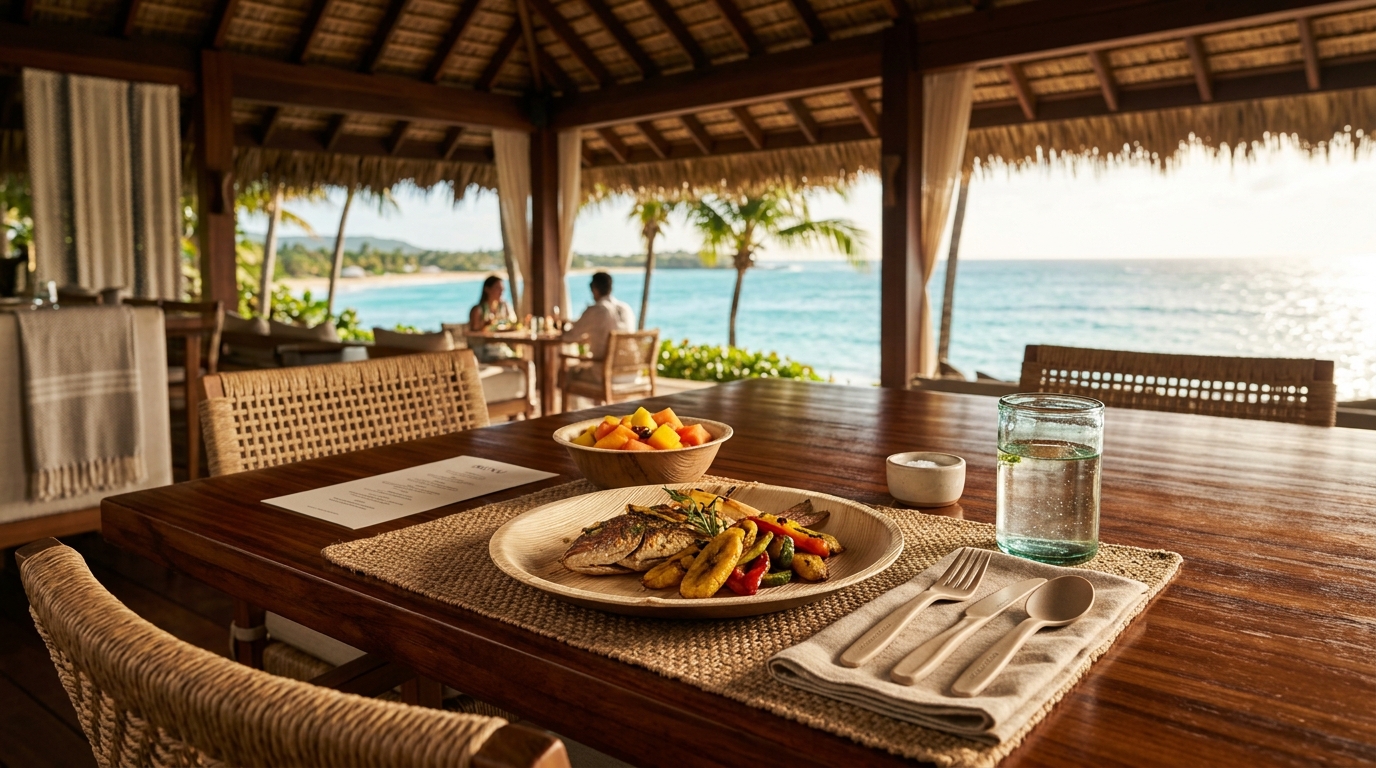
- Hospitality Brand Alignment: Luxury eco-resorts gain an authentic, rustic-luxury dining presentation that aligns directly with guest expectations for sustainability.
- Import Substitution: Replaces recurring overseas container shipments of foreign plastic foodware with regional bio-based products.
- Municipal Waste Diversion: Eliminates non-degradable takeout packaging from municipal landfills, directly easing long-term waste management costs.
- 100% Chemical-Free: Thermo-pressed purely with heat and pressure, using zero synthetic glues, plastics, or PFAS coatings.
- Rapid Soil Degradation: Breaks down naturally in ambient tropical soil within 60–90 days into organic humus.
- Local Supply Chain Resilience: Diversifies regional commerce by monetizing agricultural byproduct streams.
- UN Environment Programme (UNEP): Single-Use Plastics and Sustainable Alternatives in Island Developing States.
- ASTM D6400 & EN 13432 Standards: Standard Specification for Labeling of Plastics Designed to be Aerobically Composted in Municipal or Industrial Facilities.
- Agricultural Waste Valorization Research: Journal of Cleaner Production — Thermo-mechanical characteristics and life-cycle analysis of Areca palm leaf biocomposites.