In tropical island environments, fresh water and fertile topsoil are two of the most constrained natural resources. Island growers, luxury landscape developments, and commercial nurseries frequently struggle with porous, alkaline limestone soils with minimal organic matter—forcing them to import expensive bales of sphagnum peat moss from thousands of miles away.
At the same time, roadside beverage vendors, resorts, and agricultural operations discard immense quantities of fresh coconut husks every week. These bulky green and brown shells occupy significant landfill volume, resist rapid natural breakdown, and often become breeding grounds for insects when left unmanaged.
The Material Anatomy of the Coconut Husk
The thick fibrous middle layer of a coconut (the mesocarp) contains two high-value commercial components:
- Coconut Coir Pith (Coco Peat): A spongy, cellular dust that can hold up to 8 to 10 times its dry weight in water, providing outstanding water retention and aeration for plant root systems.
- Coir Bristle & Mattress Fiber: Tough, high-lignin natural strands resistant to fungal rot and saltwater degradation, ideal for erosion-control geotextile blankets, sediment logs, and woven nursery mats.
“Island food security is inseparable from soil biology. By processing local agricultural byproducts into water-retentive growing media, we reduce freight dependency while empowering local farmers to cultivate crops with less fresh water.”
Agronomic Advantages Over Imported Peat Moss
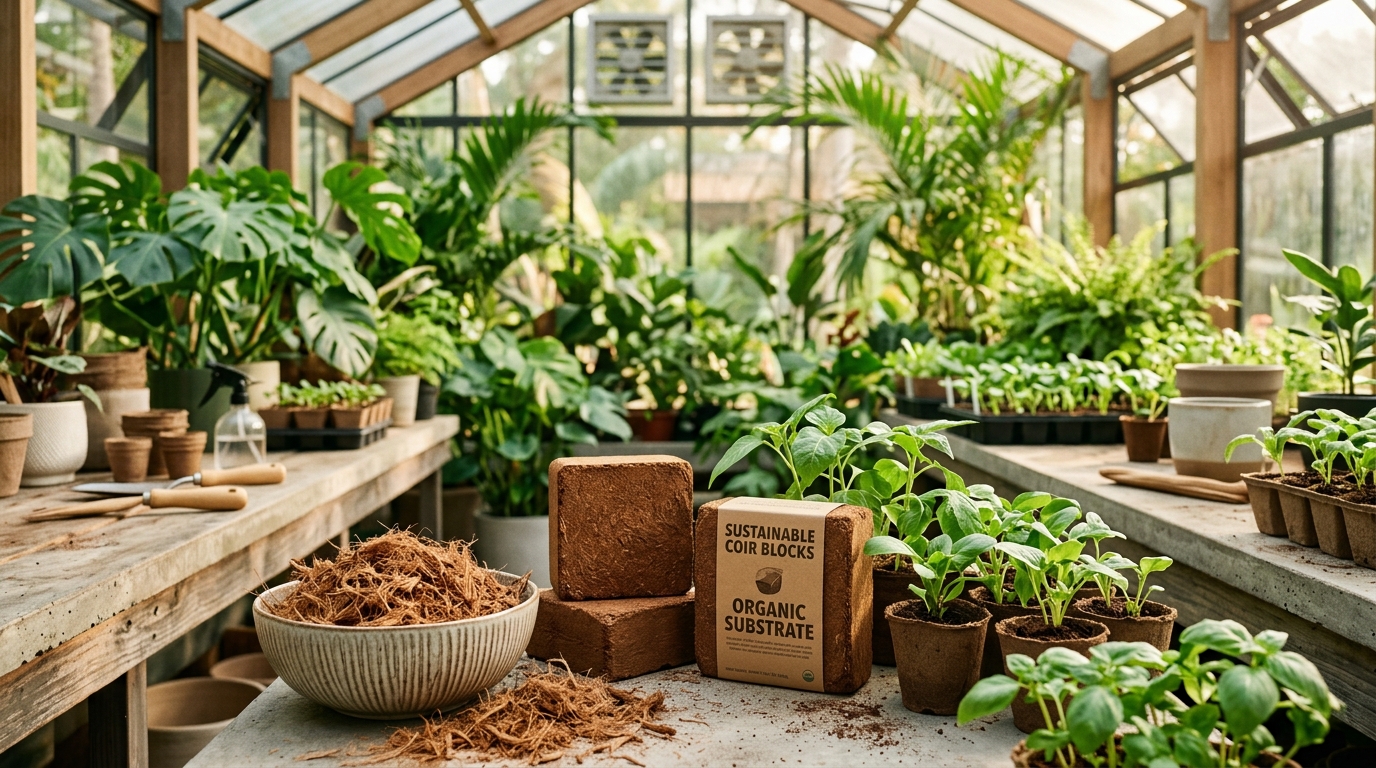
For island horticulturalists and hydroponic operators, coconut coir offers key performance advantages:
- Superior Water Retention in Arid Climates: Coir re-wets effortlessly when dry, unlike peat moss which becomes hydrophobic and repels water after drying out.
- Optimal pH Balance: Coir naturally maintains a near-neutral pH (5.8 to 6.8), eliminating the need for heavy lime buffering required by acidic peat.
- Renewable & Peatland-Preserving: Harvesting sphagnum peat depletes ancient wetland carbon sinks, whereas coir is a 100% renewable annual agricultural byproduct.
Decentralized Decortication for Island Communities
Modern mechanical decorticators are compact, modular units capable of processing hundreds of husks per hour on-site. By deploying localized processing in Turks & Caicos:
- Landscaping Self-Sufficiency: Luxury resorts and private villas can utilize coir mulch and soil amendments produced on-island to maintain lush gardens with reduced irrigation water.
- Hydroponic & Greenhouse Agriculture: Local commercial farms gain access to clean, pathogen-free growing slabs, boosting domestic vegetable production and salad greens.
- Coastal Erosion Logs: Coir fiber rolls installed along dunes and coastal slopes trap sand and support native dune vegetation without introducing plastic netting into the ocean.
- High Water Retention: Holds 8x–10x its weight in moisture, significantly reducing agricultural irrigation demand.
- Municipal Waste Diversion: Converts bulky organic debris from landfills into valuable commercial soil conditioners.
- Import Replacement: Displaces foreign peat moss shipments with a locally sourced, sustainable growing medium.
- Food and Agriculture Organization (FAO): Coir Processing Technologies and Market Opportunities for Small Island Developing States.
- International Society for Horticultural Science (ISHS): Physical and Chemical Properties of Cocopeat as a Substrate in Soilless Culture.
- HortScience Field Research: Comparative Growth Trials of Vegetable Crops in Sphagnum Peat vs. Coconut Coir Substrates.