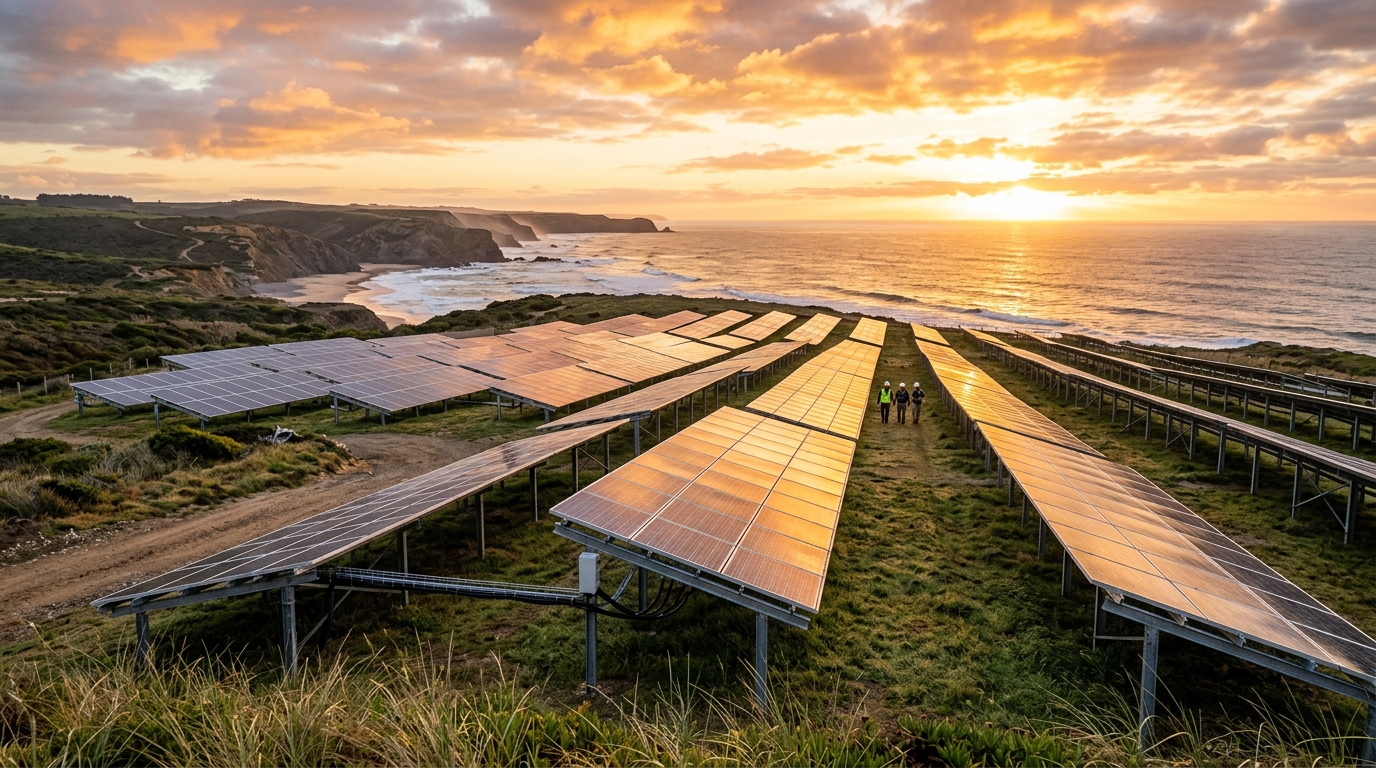

Across global coastlines and island archipelagos, municipal leaders face a shared dilemma: hundreds of thousands of tons of post-consumer beverage glass piling up in overstretched landfills, set against an accelerating regional shortage of construction aggregate and natural sand to protect vulnerable shorelines from storm surge.
Global Precedent: How New Orleans Pioneered Glass-to-Sand Recovery
In Louisiana, a state losing a football field of coastal land to erosion every 100 minutes, a grassroots initiative called Glass Half Full demonstrated how a localized circular economy can solve two crises simultaneously. Founded by college students Franziska Trautmann and Max Steitz, the organization began collecting discarded wine, beer, and spirit bottles across New Orleans—a city that previously landfilled nearly all of its commercial glass.
By deploying commercial-grade pulverizing machinery, the team converts millions of pounds of post-consumer glass directly into sand and gravel. Rather than ending up buried in a landfill forever, that pulverized material is laboratory-tested, cleared of contaminants, and deployed directly into coastal wetland restoration projects, disaster relief sandbags, and shoreline stabilization barriers across the Gulf Coast.
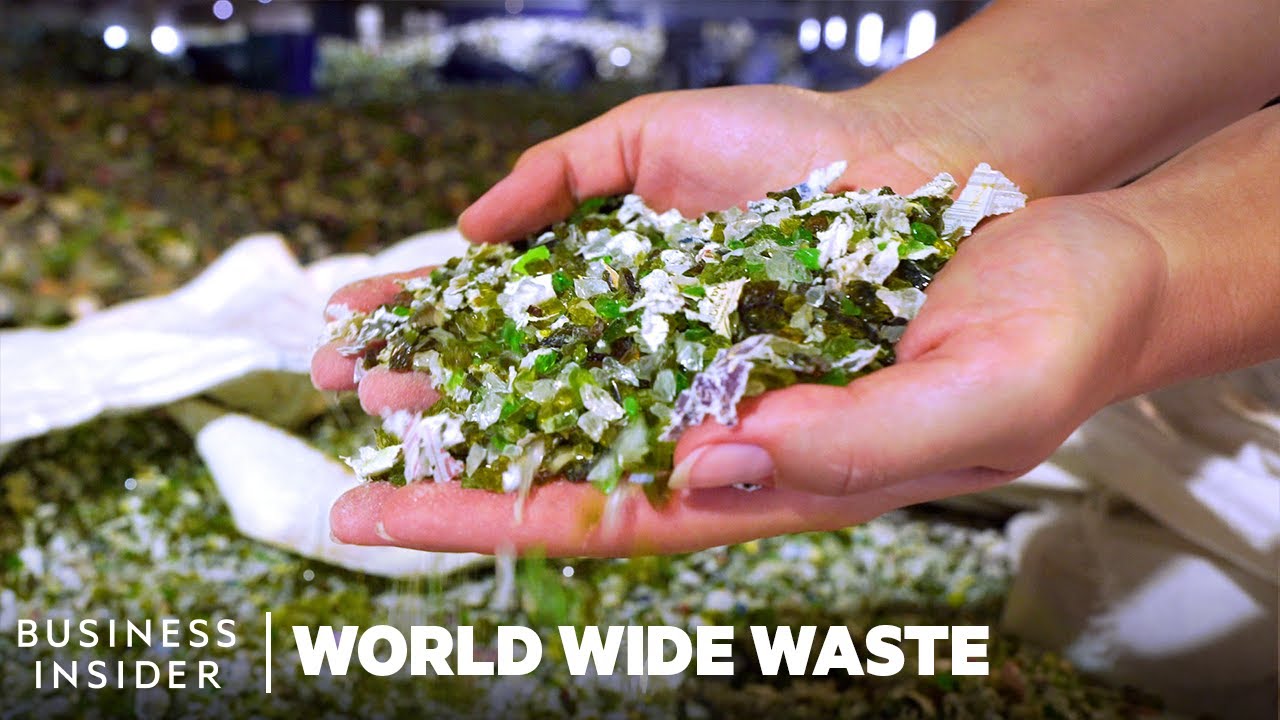
Case Study Documentary: How New Orleans-based Glass Half Full crushes discarded glass bottles into beach-grade sand to restore vanishing coastal wetlands and divert solid waste from landfills.
The Physics & Mechanics of Kinetic Vortex Implosion
A common misconception is that crushed glass produces razor-sharp, hazardous shards. While rudimentary hammer-mills can produce jagged edges, modern resource recovery relies on high-speed kinetic vortex implosion.
Inside high-velocity implosion chambers, blunt rotating impellers subject glass bottles to intense kinetic shockwaves. Because commercial container glass consists primarily of silicon dioxide (SiO2), soda ash (Na2CO3), and limestone (CaCO3), the material shatters along its natural crystalline micro-fault lines. Within seconds, bottles are reduced to smooth, rounded grains of mineral sand completely devoid of sharp edges—safe to walk on barefoot and physically indistinguishable from natural beach sand.
“In island geography, waste is simply a misplaced raw material. By crushing discarded glass into rounded silica sand, we transform a foundational municipal freight cost into an essential building block for coastal resilience.”
The Turks & Caicos Opportunity: Localized Circular Supply Chains
What does this proven global model mean for the Turks & Caicos Islands?
As a premier luxury tourism destination welcoming hundreds of thousands of international guests annually, Providenciales and the family islands generate substantial volumes of high-quality glass beverage containers. Currently, the vast majority of these containers enter local municipal waste streams, consuming precious landfill volume on islands with limited terrestrial space.
Meanwhile, local civil contractors and infrastructure developers must import construction-grade sand and aggregate via overseas maritime freight—paying steep shipping premiums often exceeding $60 to $110 per metric ton. Furthermore, coastal resorts frequently face beach erosion from major swells and hurricane seasons.
By establishing decentralized glass-to-sand processing hubs in Turks & Caicos:
- Landfill Life Extension: Up to 35%–40% of heavy container waste by weight is diverted from local disposal facilities.
- Import Replacement: Clean, graded silica sand replaces expensive foreign aggregate imports for structural masonry, concrete pavers, and pipe bedding (meeting ASTM C33 standards).
- Living Shoreline Dune Buffers: Coarser sand grades can be utilized for storm-water retention beds, roadway bases, and beach renourishment buffers to shield island coastal assets.
- Closed-Loop Hospitality: Transforms empty bottles from luxury resorts directly into coastal protection materials for the same shores.
- Zero Shipping Emissions: Eliminates the heavy carbon footprint of barging aggregate across international waters.
- Local Material Self-Reliance: Builds domestic production capacity for core construction and erosion control inputs.
A Strategic Blueprint for Island Self-Reliance
Initiatives like Glass Half Full prove that high-impact environmental solutions do not require distant, complex industrial supply chains. For island economies, adopting localized kinetic implosion is a straightforward, commercially viable blueprint: turning an everyday disposal burden into an engine for economic self-reliance and long-term coastal preservation.
- Glass Half Full (New Orleans, LA): Grassroots circular economy model converting post-consumer glass into coastal restoration sand. Watch Documentary Case Study →
- ASTM International Standard C33 / C33M: Standard Specification for Concrete Aggregates, grading fine and coarse silica sand for structural applications.
- Coastal Engineering & Wetland Restoration Data: Tulane University & US Army Corps of Engineers field research on glass-derived sand suitability for barrier island stabilization.