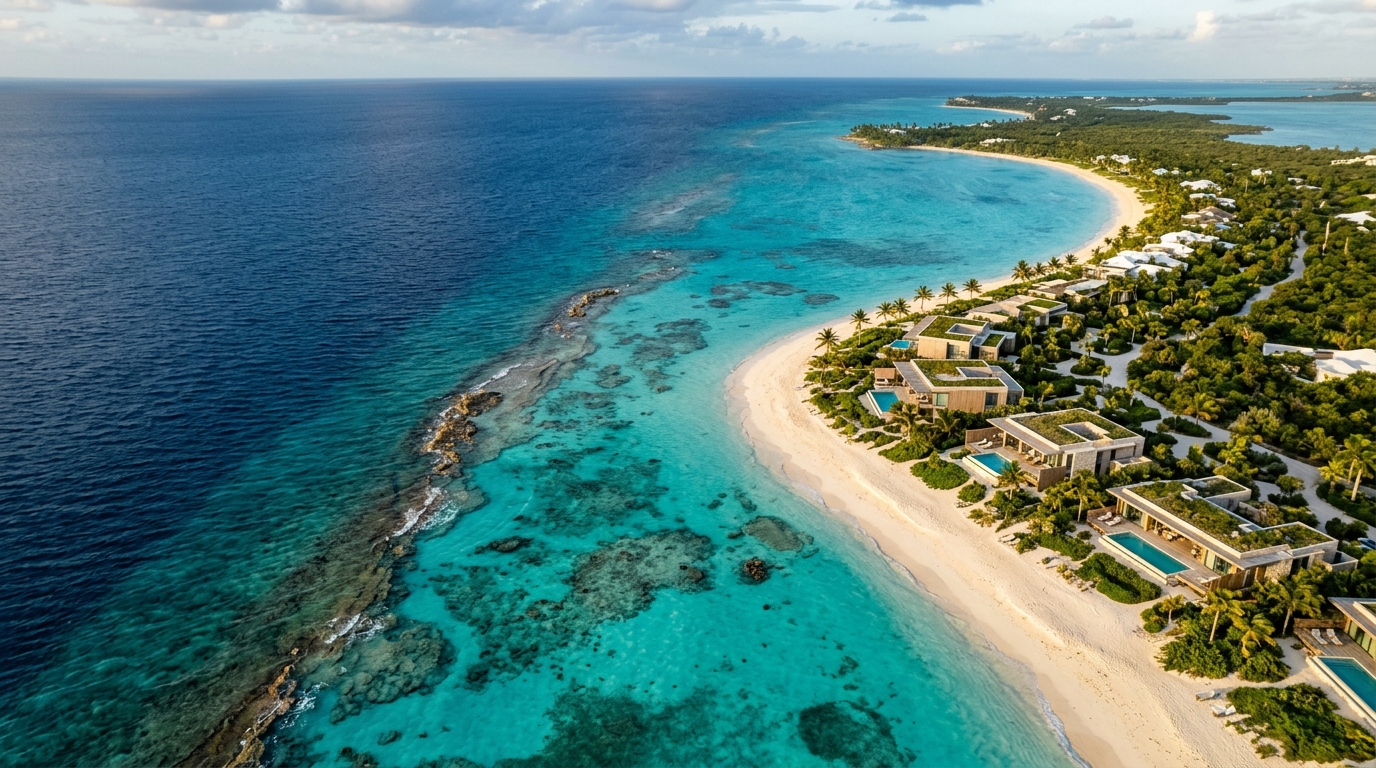
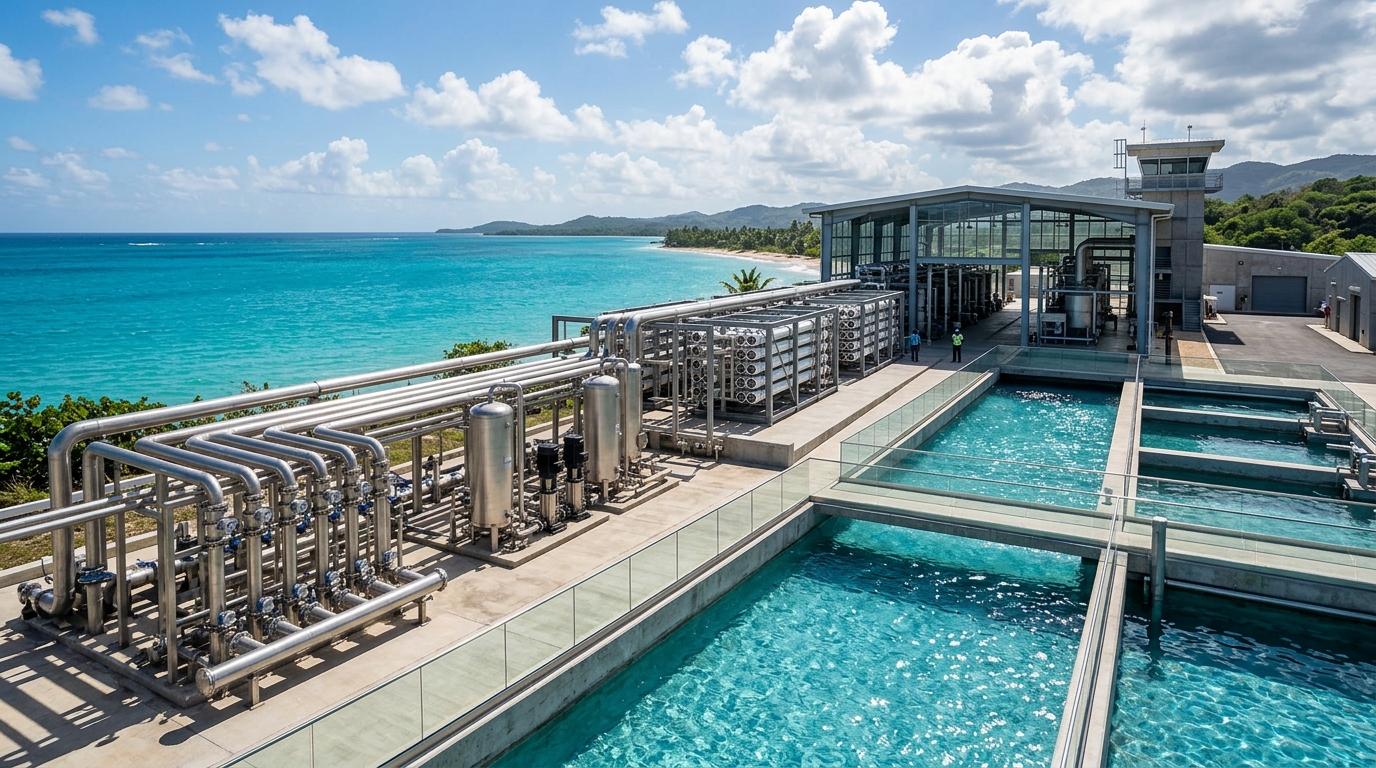
Across arid archipelagos with minimal rivers or surface catchment, Seawater Reverse Osmosis (SWRO) is the fundamental backbone of modern civilization. In the Turks & Caicos Islands, nearly all municipal drinking water, resort supply, and commercial water rely on high-pressure membrane desalination.
However, for every gallon of ultra-pure freshwater produced, reverse osmosis plants generate approximately 1.2 to 1.5 gallons of hypersaline brine—a dense, concentrated stream containing double the salinity of natural ocean water along with residual anti-scalant treatment compounds. Discharging this dense concentrate back into shallow coastal waters risks depleting benthic oxygen levels and stressing sensitive coral reef ecosystems.
The Emerging Science of Brine Mining & Mineral Extraction
Instead of viewing brine exclusively as an environmental disposal problem, advanced materials researchers and chemical engineers are pioneering brine valorization—extracting valuable commercial elements from concentrated seawater streams:
- Magnesium Hydroxide & Oxide: High-purity magnesium precipitated through alkaline reaction, used in water treatment, refractory materials, and pharmaceutical antacids.
- Calcium Carbonate & Gypsum: Industrial minerals used in drywall manufacturing, soil conditioning, and non-structural building plaster.
- High-Purity Sodium Chloride (Salt): Food-grade sea salt, pool-grade salt, and industrial feedstock for localized chlor-alkali production (generating eco-friendly chlorine for local water sanitation).
“In an island economy, waste is simply an unharvested resource. Desalination brine contains the exact minerals our construction and chemical industries import every month.”
Zero-Liquid Discharge (ZLD) & Solar Evaporation Saltworks
Historically, Turks & Caicos held a globally renowned salt production heritage—exporting millions of bushels of natural sea salt from the salinas of Grand Turk, Salt Cay, and South Caicos for centuries.
Modern Zero-Liquid Discharge (ZLD) systems integrate this historic advantage with contemporary engineering:
- Solar Thermal Concentrators: Harnessing high Caribbean solar irradiance in shallow evaporation crystallizers to dry residual brine with near-zero electricity consumption.
- Electrodialysis Metathesis (EDM): Membrane-based electrochemical separation that splits salts into caustic soda (NaOH) and hydrochloric acid (HCl)—two essential industrial chemicals used for local water disinfection and membrane cleaning.
- Ecological Protection: Eliminates coastal brine outfalls entirely, shielding marine biodiversity and nearshore seagrass beds.
Strategic Value for Turks & Caicos and Caribbean Islands
Implementing modular brine recovery on island desalination facilities delivers practical economic dividends:
- Sanitation Chemical Independence: Producing on-island sodium hypochlorite disinfectant from brine reduces reliance on dangerous chemical shipping containers.
- Artisanal & Gourmet Sea Salt: Reviving premium heritage salt export with certified solar-evaporated mineral salts.
- Marine Ecosystem Stewardship: Safeguards world-renowned coral reefs and turquoise water clarity that underpin the luxury tourism economy.
- Zero-Discharge Ecology: Protects coral reefs and nearshore marine life by eliminating hyper-saline coastal plumes.
- Valuable Mineral Recovery: Yields high-purity magnesium, calcium, and industrial salts from waste streams.
- Chemical Self-Reliance: Enables localized on-site production of chlorine and cleaning agents for water treatment facilities.
- International Desalination Association (IDA): State of the Art in Zero Liquid Discharge (ZLD) and Brine Mining Technologies.
- Desalination Journal (Elsevier): Resource Recovery from Seawater Reverse Osmosis Brine — Technical Feasibility and Life-Cycle Economics.
- Caribbean Environmental Health Institute (CEHI): Environmental Impacts of Desalination Outfalls in Coral Reef Ecosystems.